How to Use NuroClean Mold Remover Gel Safely: 2-Hour Protocol & Bathroom Traps
Mixed results with household mould gels almost always trace back to three preventable mistakes: squeezing gel over damp shower silicone, working inside an unventilated bathroom, or expecting a topical gel to revive cracked, mould-riddled sealant that needs cutting out.
Follow the dry-seam steps, ventilation rules and chemical warnings below to get predictable results across humid coastal and inland South African homes.
3-Step Daily Routine
1. Dry the Joint & Put On Gloves
Wipe damp grout, shower silicone or rubber gaskets completely dry with a towel, pull on rubber or nitrile gloves and open bathroom windows wide before screwing on the precision nozzle.
2. Apply Bead & Leave Up to 2 Hours
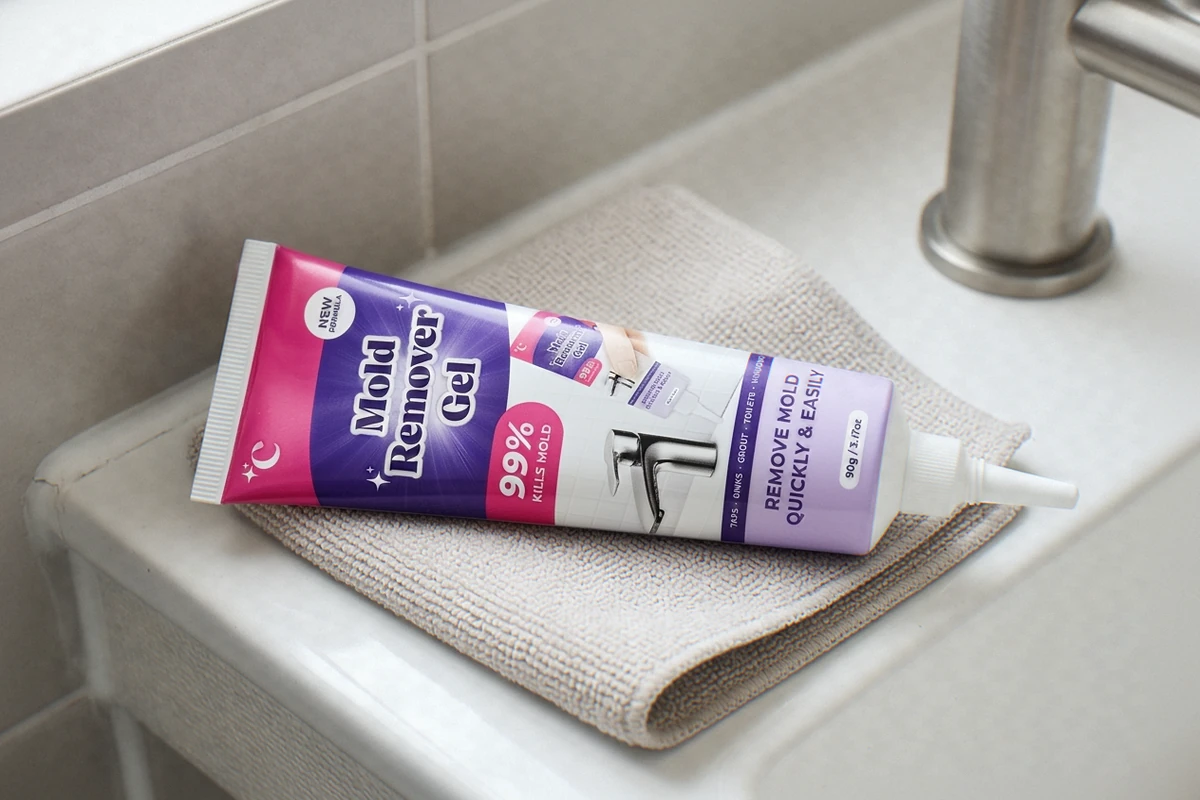
Run a continuous 3 to 5 mm bead of NuroClean Mold Remover Gel straight over the dark seam and leave it untouched for up to 120 minutes (2 hours) with steady room airflow.
3. Wipe Away, Rinse & Dry Off
Wipe lifted residue off with a damp disposable cloth, rinse the treated seam thoroughly with cool water and dry the surface to slow fresh mildew growth.
The Dry-Seam Rule & Realistic Coverage per 90 g Tube
Even a heavy no-drip gel slides straight down vertical tiles when applied right after a hot shower. Surface condensation puts a thin film of water under the bead, breaking adhesion and watering down the active gel within minutes. Wipe grout lines, silicone corners and washing-machine rubber folds bone-dry first — ideally before anyone showers that morning — so the bead stays locked across the full 2-hour dwell window.
Plan tube count realistically rather than stretching one tube too thin. A single 90 g tube comfortably covers one standard shower enclosure plus a hand-basin perimeter. Tackling two bathrooms, kitchen splashback seams, window tracks and a front-loader gasket easily calls for 2 to 4 tubes, which aligns with the checkout's 2-tube minimum ($58.08 delivered) and 4-tube bestseller ($84.30 delivered).
Load-Shedding Ventilation & Strict Acid/Bleach Mixing Warning
Official UK Health Security Agency guidance on indoor damp and mould (linked below) underlines keeping rooms well ventilated while treating fungal growth. Across humid coastal suburbs in Durban or Cape Town — and inside windowless ensuites — electric bathroom extractor fans cut out during load-shedding. Time your 2-hour dwell window for daylight hours when windows and doors can stay wide open, and keep children and pets out until rinsing finishes.
Follow one strict safety boundary without exception: never combine NuroClean Mold Remover Gel with white vinegar, acidic limescale descalers, citric acid cleaners, acidic toilet gels or ammonia products. Mixing acid with typical bleach-based mould gels generates hazardous chlorine gas. If another bathroom cleaner was sprayed earlier, flush the surface generously with plain water and let it dry fully before applying mould gel.
Surface Mould vs. Perished Silicone: Knowing Where Gel Stops
On glazed tile grout, porcelain rims, window sills and surface mildew along rubber fridge or washer seals, a 2-hour dry bead clears discolouration cleanly without abrasive scrubbing. Heavy multi-season stains occasionally need a second dry pass.
Where black mould has grown deep inside 5- to 10-year-old split or perished bathroom silicone, no topical gel can turn degraded rubber back to bright white. Use the gel on the surrounding ceramic grout, then slice out the failed silicone strip and apply fresh sanitary anti-fungal sealant. Compare exact landed USD tiers in our South Africa USD bundle and delivery breakdown or return to the main NuroClean Mold Remover Gel buying check.
Mandatory Safety & Usage Notes
- External household cleaner only — not a dietary supplement or capsule (distinct from Neuro Clean capsules and NuroClean spray cleaning tablets).
- No full online INCI list or Safety Data Sheet (SDS) is published on get-nuro.com; inspect the physical carton warnings before first use.
- Never mix with vinegar, limescale descalers, acidic toilet cleaners or ammonia, as acid plus typical bleach-based mould gels releases hazardous chlorine gas.
- Wear nitrile or rubber gloves, avoid skin and eye contact, keep away from children and pets, and ventilate bathrooms well — especially during load-shedding.
- Patch-test on a hidden edge first before applying to natural stone (marble, travertine), untreated wood, anodised metal or dyed grout.